Worn or missing seals
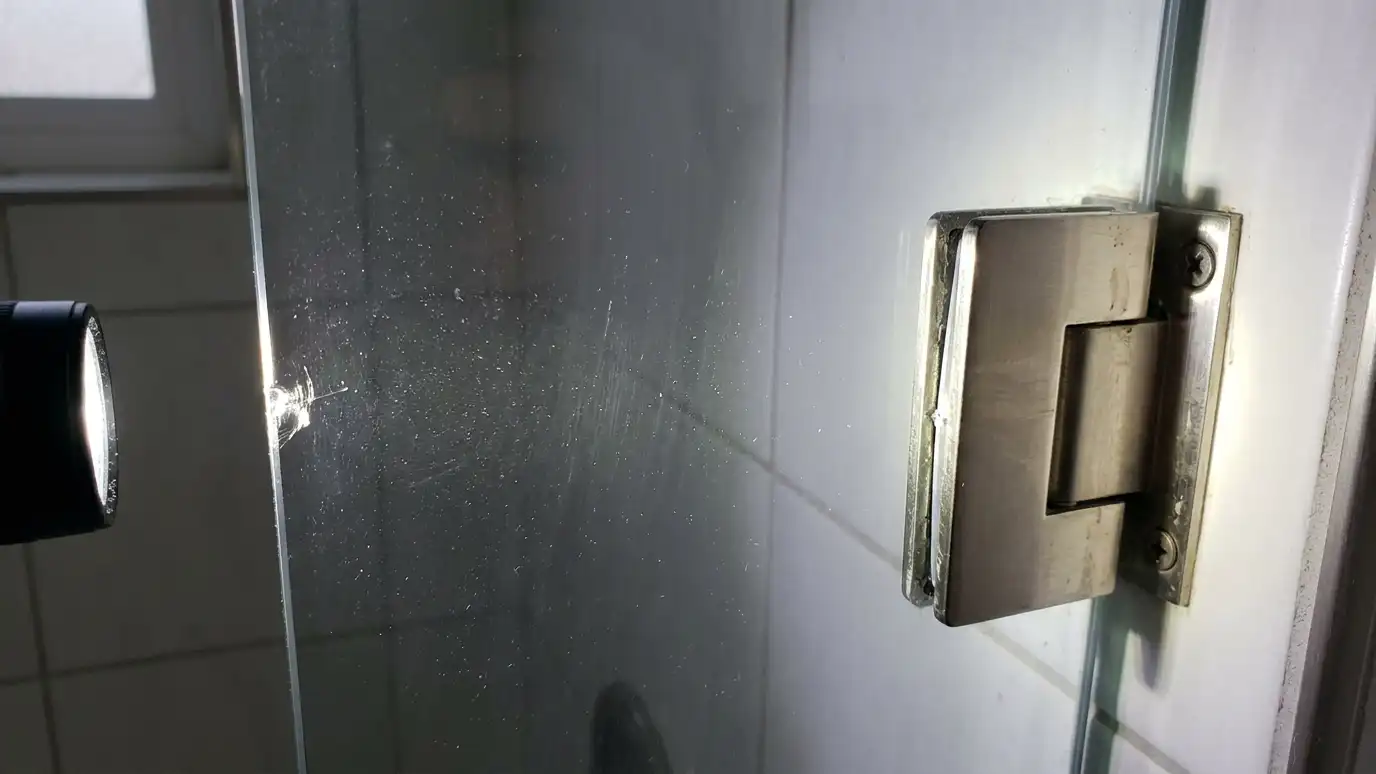
Seals along the sides and the closing edge harden, tear and shrink over time. When they no longer touch the glass or the wall, water slips through. Seals are easy to replace, and new ones often stop the leak right away.
Check for gaps where light shows through or where the seal looks flattened or cracked.
Match the profile to your glass thickness when you replace it.
Take a photo of the leak while it happens, or run a small amount of water along the edge while someone watches from outside. Seeing the path of the water usually points to the cause.
Bottom sweeps and drip rails
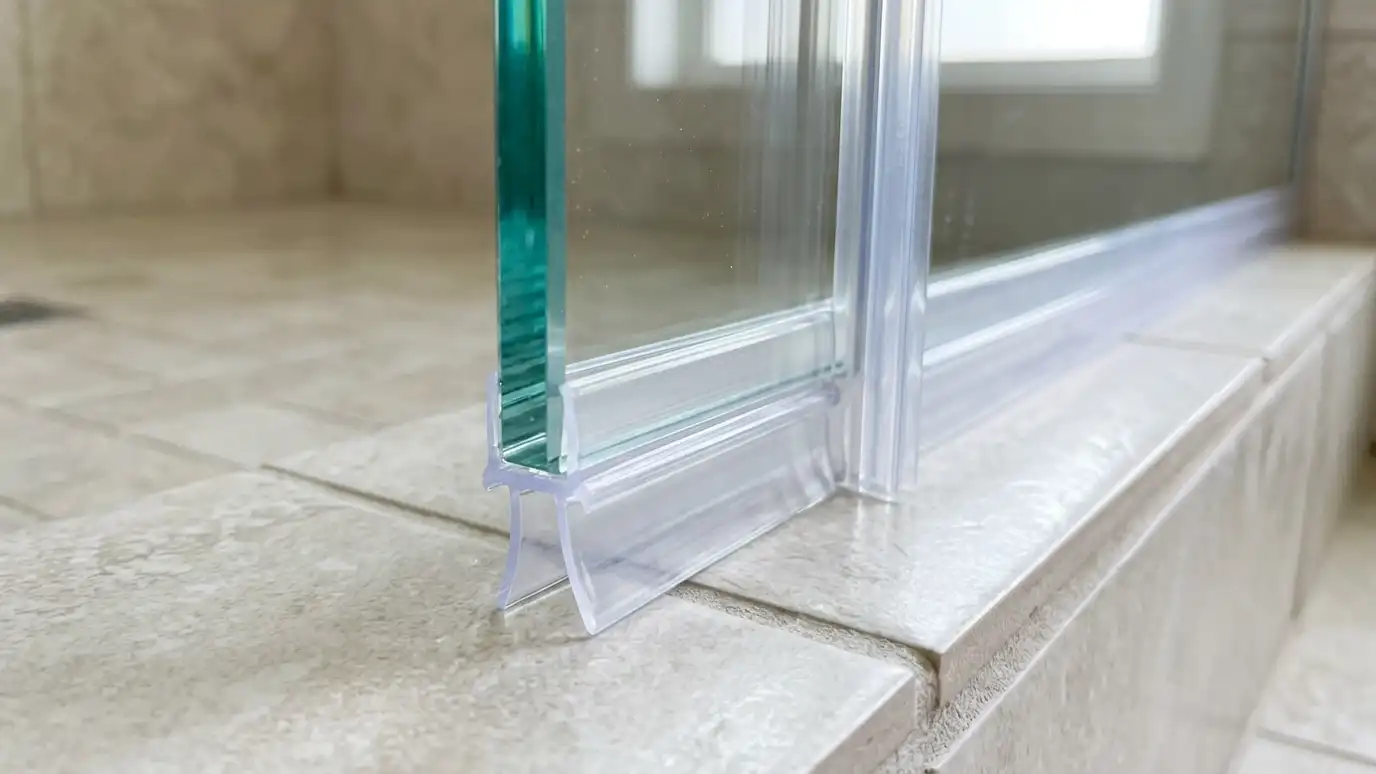
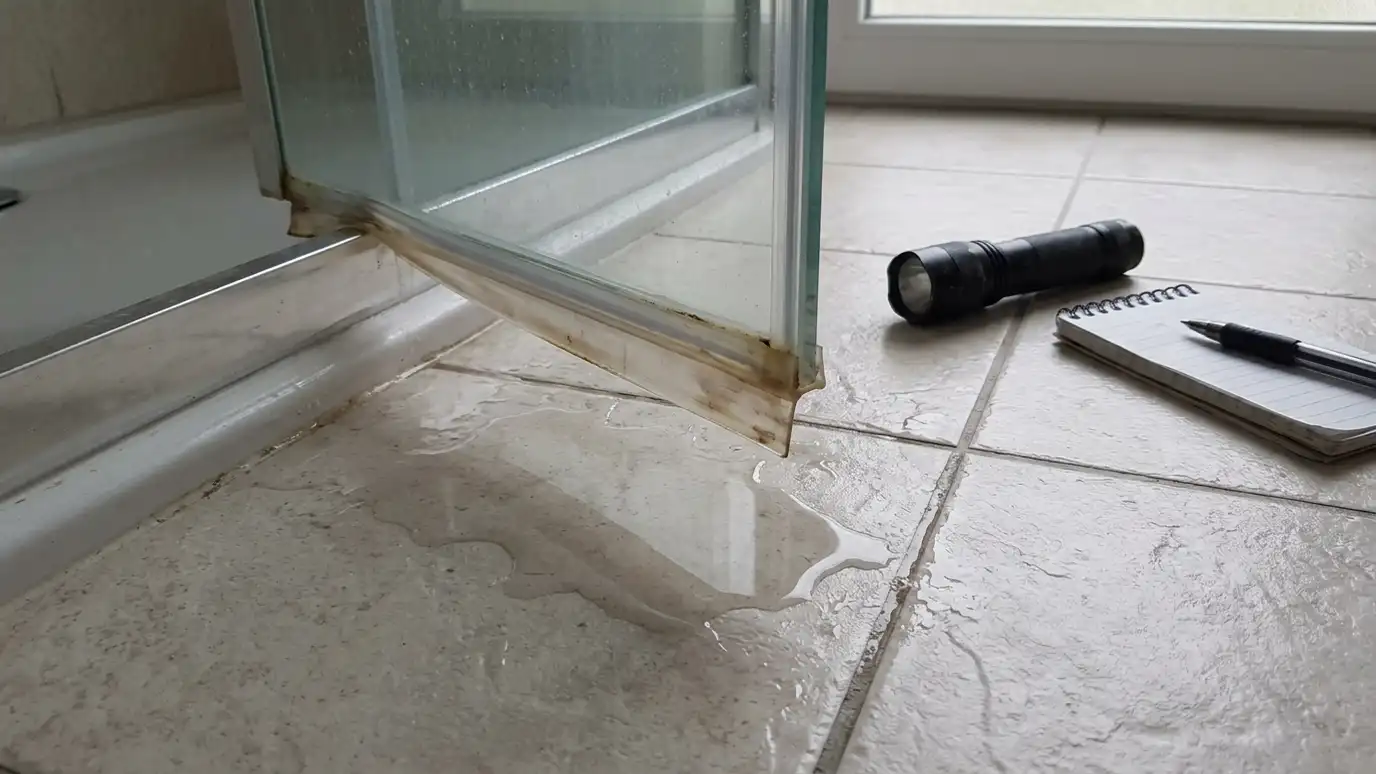
The sweep at the bottom of the door keeps water from running out under it. When it wears, tears or falls off, you get puddles. A drip rail directs water back into the shower.
Replace worn sweeps and make sure the sweep reaches the curb without dragging.
If your door has no sweep, we can often add one.
Sweeps come in several shapes, from simple wipers to fins and drip rails. We match the shape to the glass thickness and the curb so water is directed back into the shower.
Alignment problems
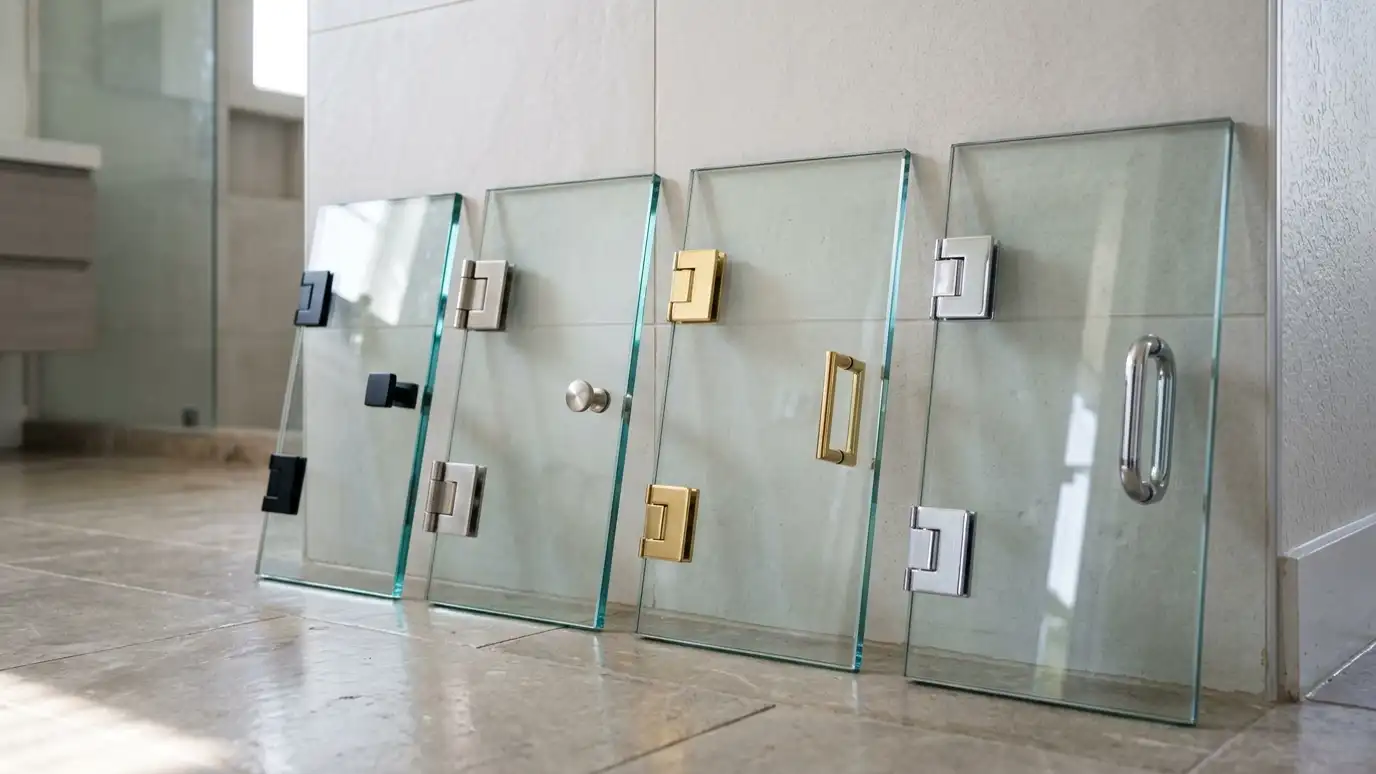
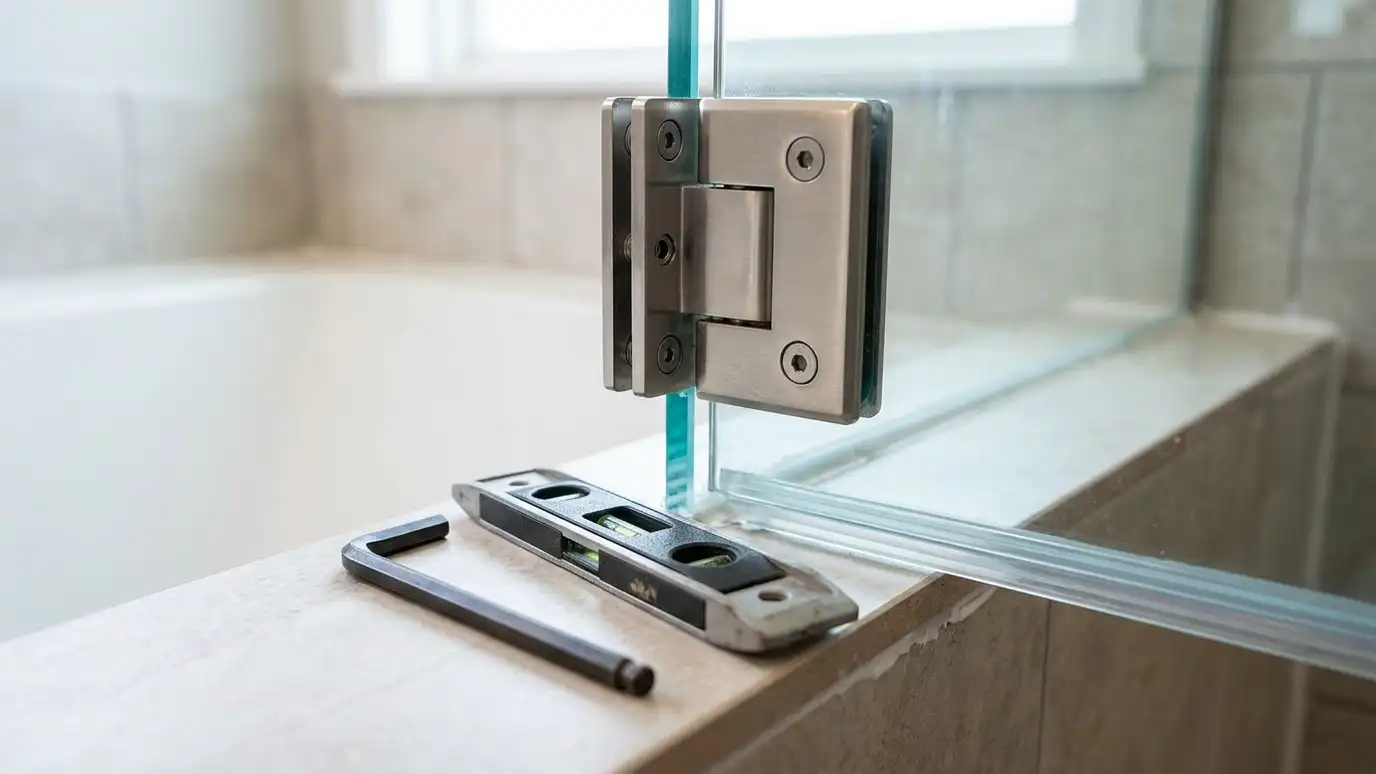
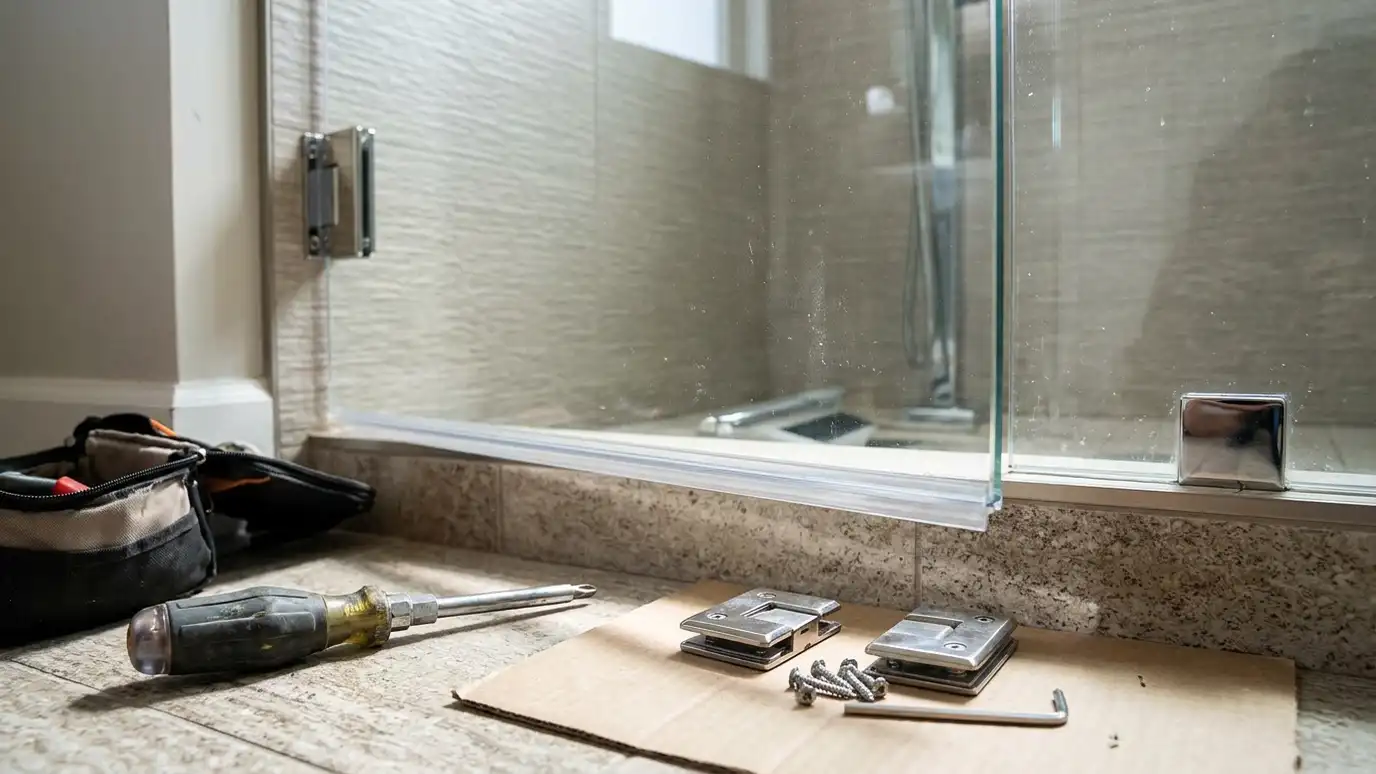
A door that has shifted out of alignment will not meet its seals. Hinges that have loosened, rollers that have worn or a wall that has moved can all cause gaps.
Adjusting the hinges or rollers often fixes the issue.
If the wall or the curb has moved a lot, the door may need a different approach.
Door alignment often changes slowly. If you notice the door closing differently than it used to, a small adjustment now may prevent a larger leak later.
Design gaps
Frameless doors have small gaps by design, and sliding doors have gaps where the panels overlap. A layout with a fixed panel and a return, a properly placed shower head and a floor that slopes to the drain help a lot.
If your design has big gaps, adding a panel or changing the shower head direction may help more than new seals.
We discuss design changes when we see them.
Consider how you use the shower. A rain head pointing at the door will throw more water at the gaps than a head that points away. Small changes in habits can reduce splash.
Curb and floor issues
A curb that is out of level can let water collect and spill. A floor that does not slope to the drain will leave puddles. These problems are in the shower, not the door, and need a different fix.
If water seems to come from the floor or the walls, a leak test is a good idea.
We tell you honestly when the problem is not the glass.
If puddles keep appearing in the same spot, check the floor slope and the drain. A glass door cannot fix a floor that holds water.
Simple tests
Run water against each edge with the shower off to see where it leaks. Put a strip of paper in the closing gap to see where the seal grips. Look for wear on the sweep.
Take photos and note when the leak happens. That helps us find the cause.
If a leak seems to come from inside the wall, stop using the shower and call a bathroom specialist.
Keep a simple log of leaks, including the date and what you changed. It helps if you need to call for service, and it helps us find the cause faster.
Start with the seals and the sweep, check the alignment and consider a panel or layout change if gaps are built into the design.