Why safety glass exists
Ordinary glass breaks into long, sharp pieces that can cause serious cuts. Safety glass is made to break in a safer way or to stay in place. Building codes generally call for safety glazing in hazardous locations, such as shower doors, glass in or near doors and large panes close to the floor, and local rules vary.
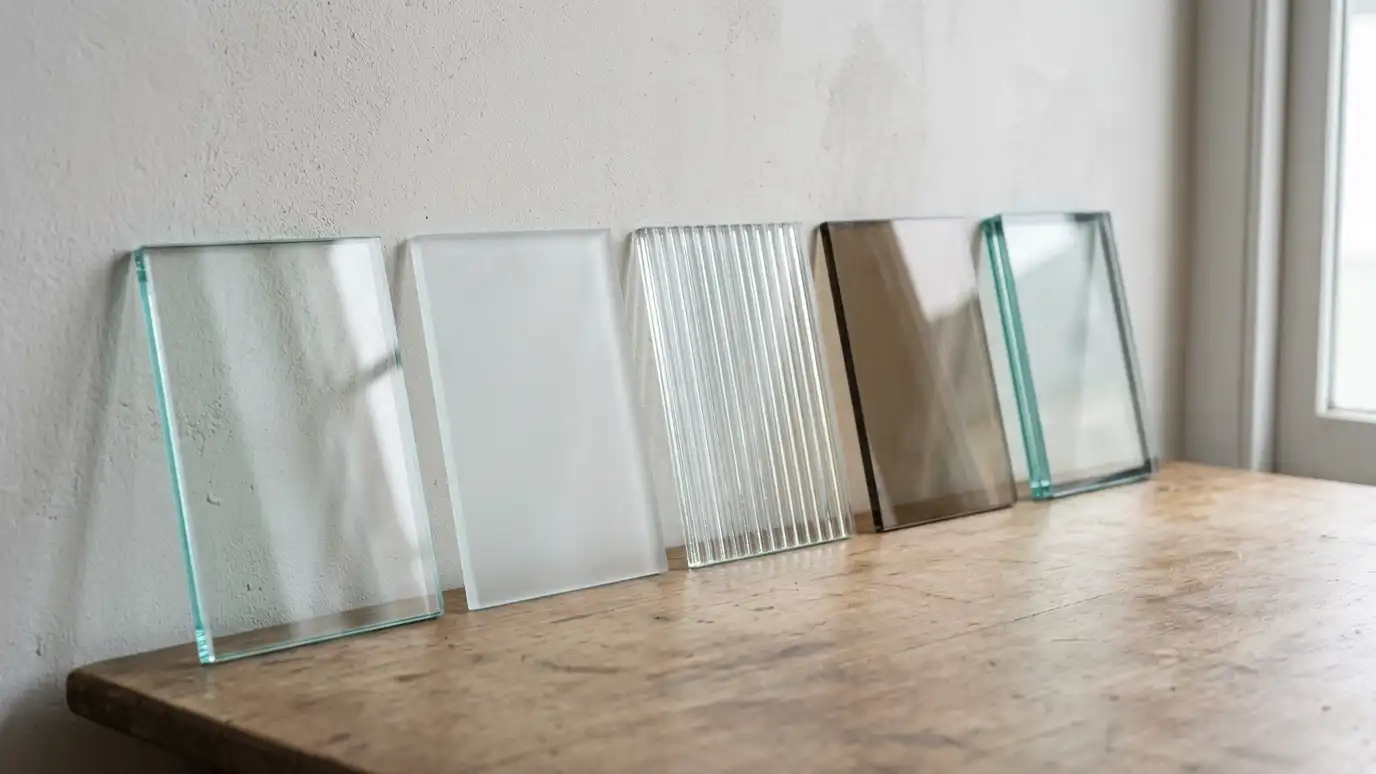
Safety glass comes in two main types: tempered and laminated.
Knowing the difference helps you choose and understand what you have.
Local rules about safety glass vary and change over time. We stay current on what is common and tell you what to verify with your local office for your specific project.
Tempered glass
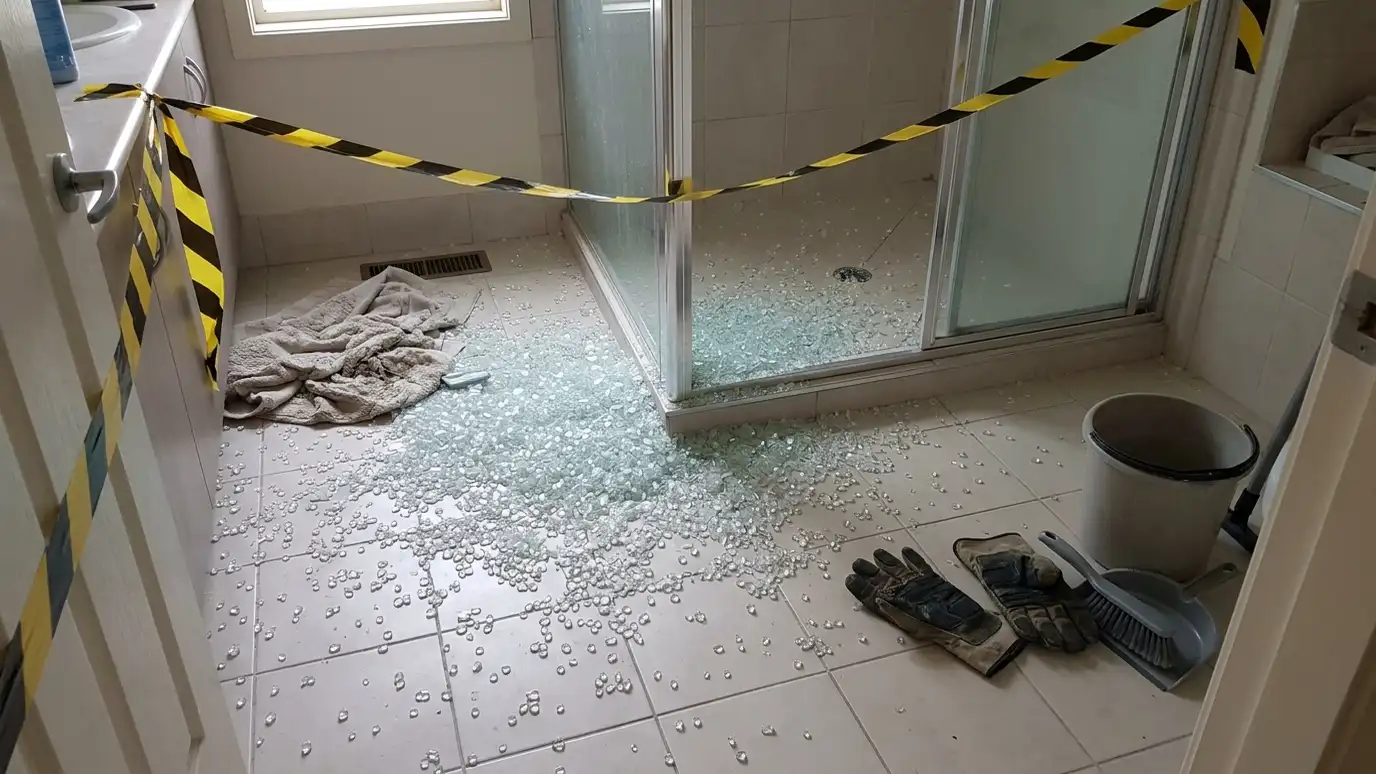
Tempered glass is heated and cooled quickly, which puts the surface in compression and makes it much stronger than ordinary glass. When it breaks, it crumbles into small, blunt pieces. It is used in shower doors, tabletops, patio doors and many other places.
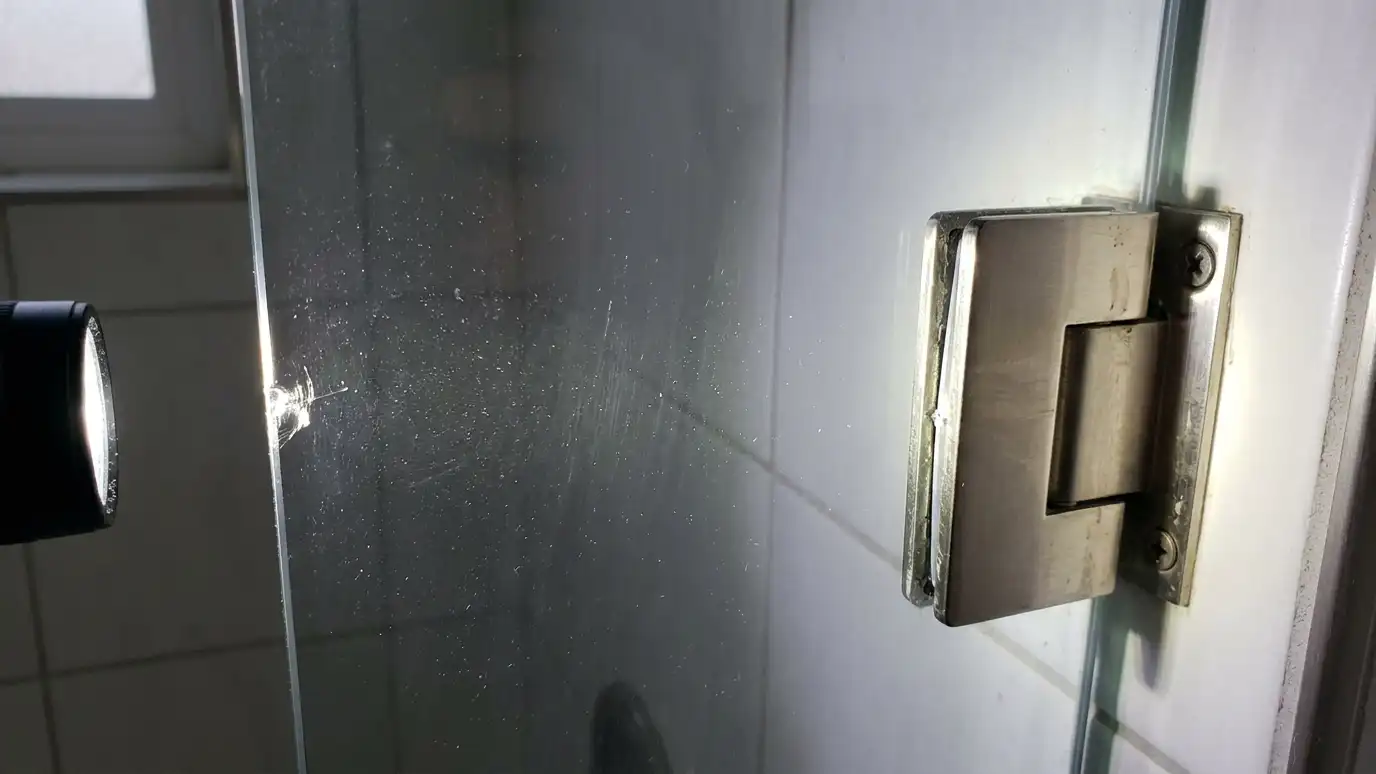
Tempered glass cannot be cut or drilled after it is made. Chips and damage at the edge can weaken it, so damaged tempered glass should be replaced.
Rarely, tempered glass can break without an obvious cause, due to flaws or stress at the edge.
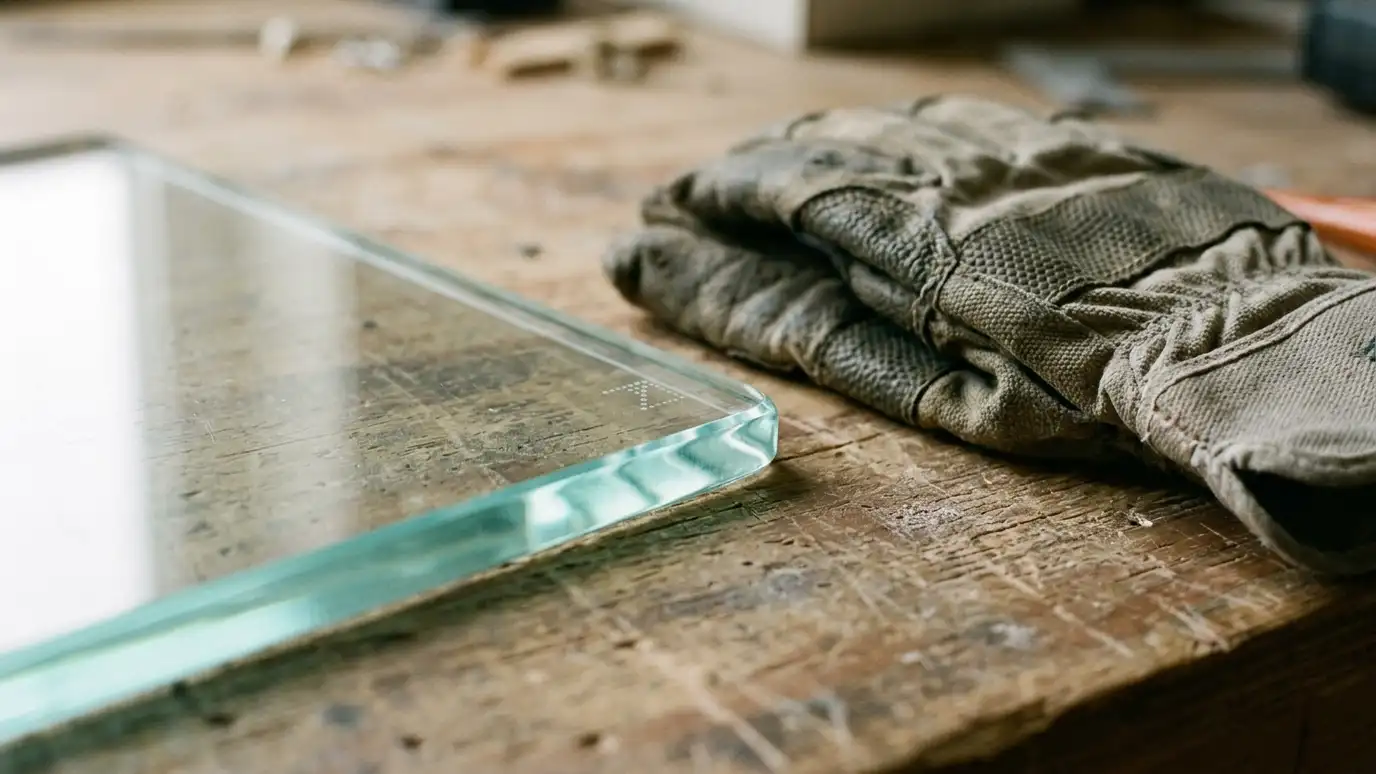
When you see a tiny etched mark in the corner of glass, it often identifies the type and maker. If you cannot find one, ask us to look, and we will tell you what we can.
Laminated glass
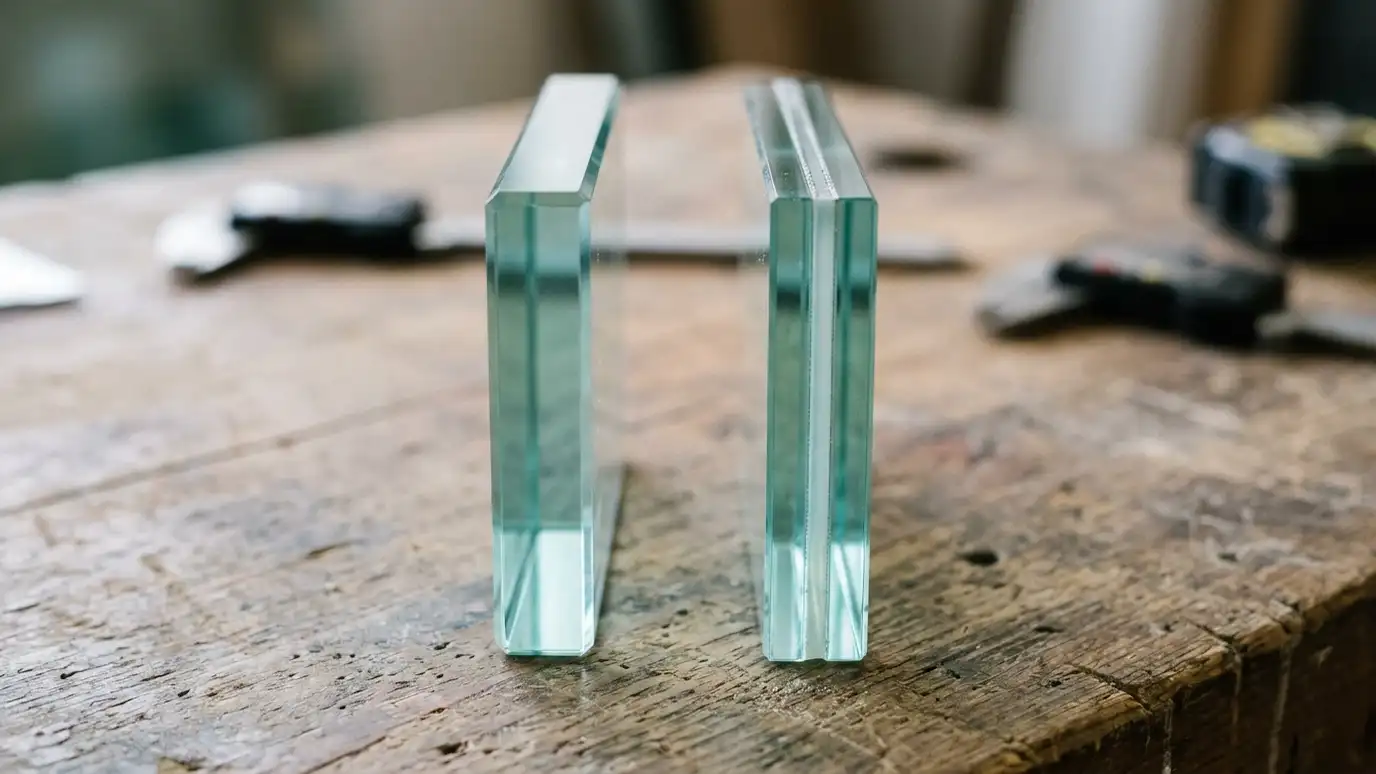
Laminated glass has two or more layers of glass joined to a tough interlayer. When it breaks, the pieces tend to stick to the interlayer, so the glass stays in the frame. It is used in railings, overhead glass, storefronts and places where security or sound matter.
Laminated glass can be tempered as well, which adds strength.
Its edges need care in wet conditions because moisture can affect the interlayer over time.
Because laminated glass keeps its pieces together, it is often chosen where a falling person or object might strike it. In railings, that behavior is a major reason for its use.
Where each is used
Shower doors and tabletops are usually tempered. Railings and overhead glass are often laminated, sometimes laminated tempered. Storefronts use tempered, laminated or a combination depending on location.
We recommend by use and by location, and we tell you what to confirm locally.
If you are not sure what kind of glass you have, many pieces carry a small etched mark in a corner that gives clues.
If you do not know what a piece of glass is, treat it carefully. Do not drill, cut or lean on glass that may be unsafe, and ask for help before making changes.
If glass breaks
Keep people and pets away. Wear shoes and gloves. Do not touch loose pieces with bare hands. Vacuum or sweep carefully, and use tape or a damp paper towel to pick up small fragments.
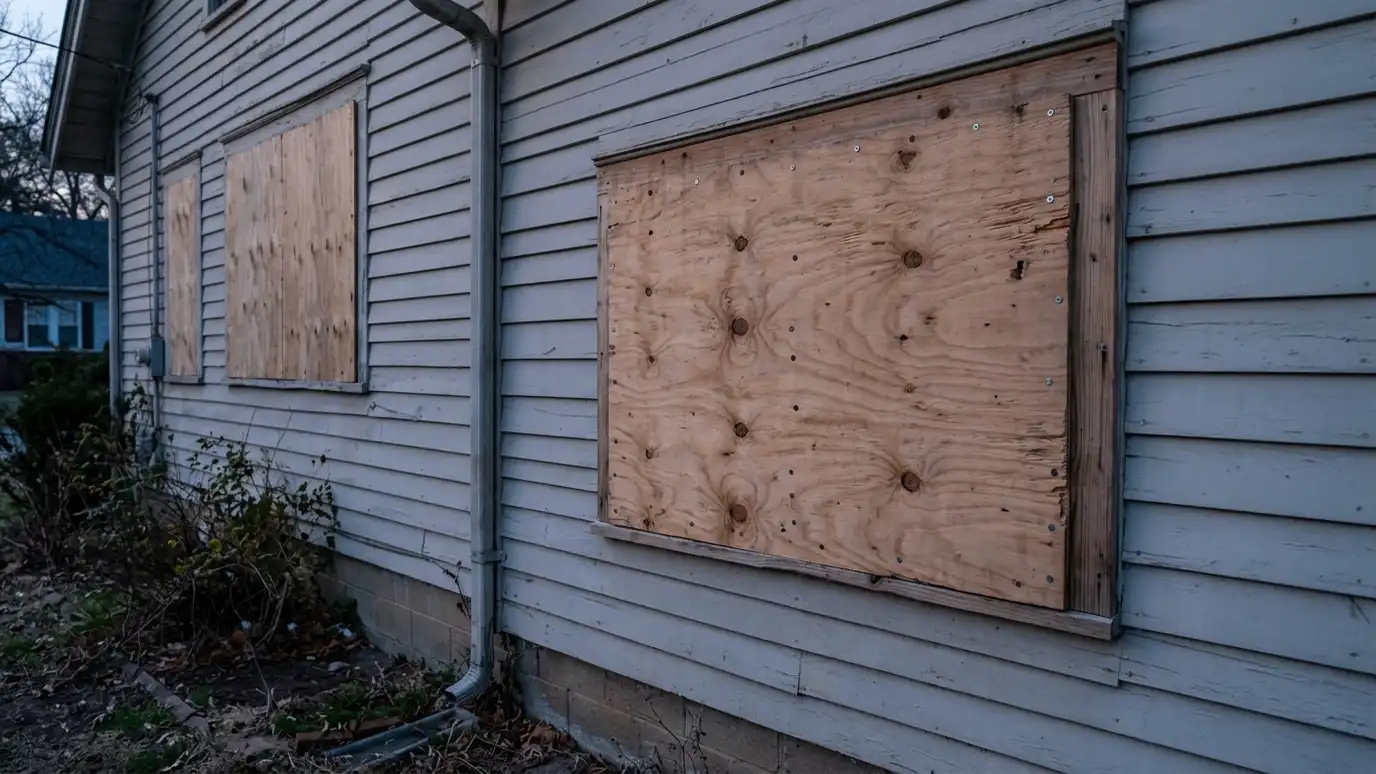
If a window is broken, cover the opening with plywood or heavy plastic to protect against weather and access. We offer emergency board-up.
Call for replacement as soon as you can.
Keep a basic cleanup kit at home: sturdy shoes, gloves, a flashlight, a broom, tape and a heavy trash bag. Having the items ready makes a bad moment easier to handle.
Preventing breakage
Avoid hitting the edges of tempered glass, because edges are weak points. Do not over-tighten hardware. Keep heavy objects away from glass, and do not use glass that is chipped or cracked.
Have loose hinges and failing hardware repaired promptly.
A yearly check of doors and hardware is a good habit.
Small habits prevent big problems: close doors gently, keep objects away from glass edges, fix loose hardware and replace chipped glass. Safe glass stays safe when it is cared for.
Use tempered or laminated glass where people can fall against it, replace chipped tempered glass and keep a plan for safe cleanup.