
Start with the scope
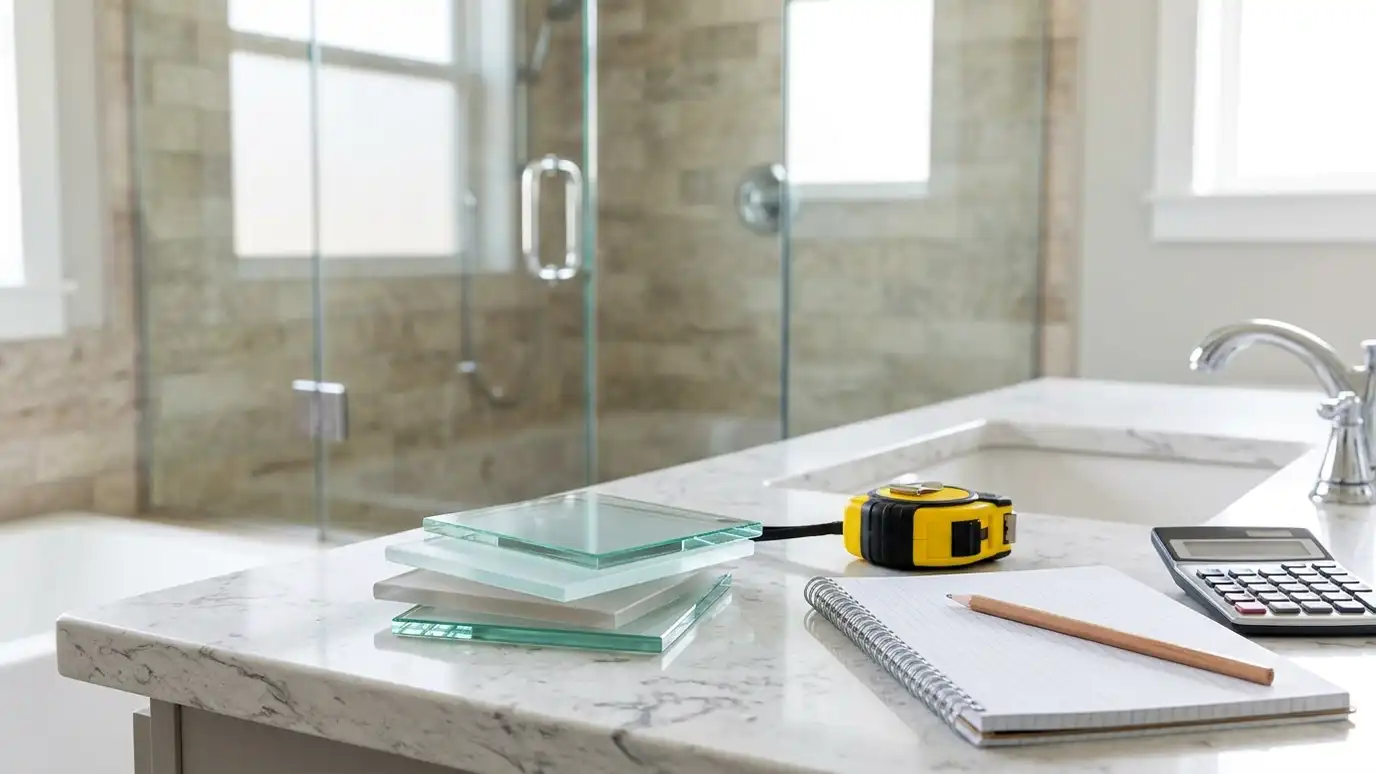
Before you call anyone, write down what you want: the type of glass project, the location, the style and any problems. A clear description helps every company give you a better answer, and it makes it easier to compare them.
Take photos of the area and measure roughly if you can. Photos help companies tell you whether your project is simple or complicated.
Be open about your timeline and budget feeling. A good company will tell you what is realistic.
Write your questions down before you call and use the same list with every company. It keeps the conversations fair and makes it easy to compare answers afterward.
Ask how they measure
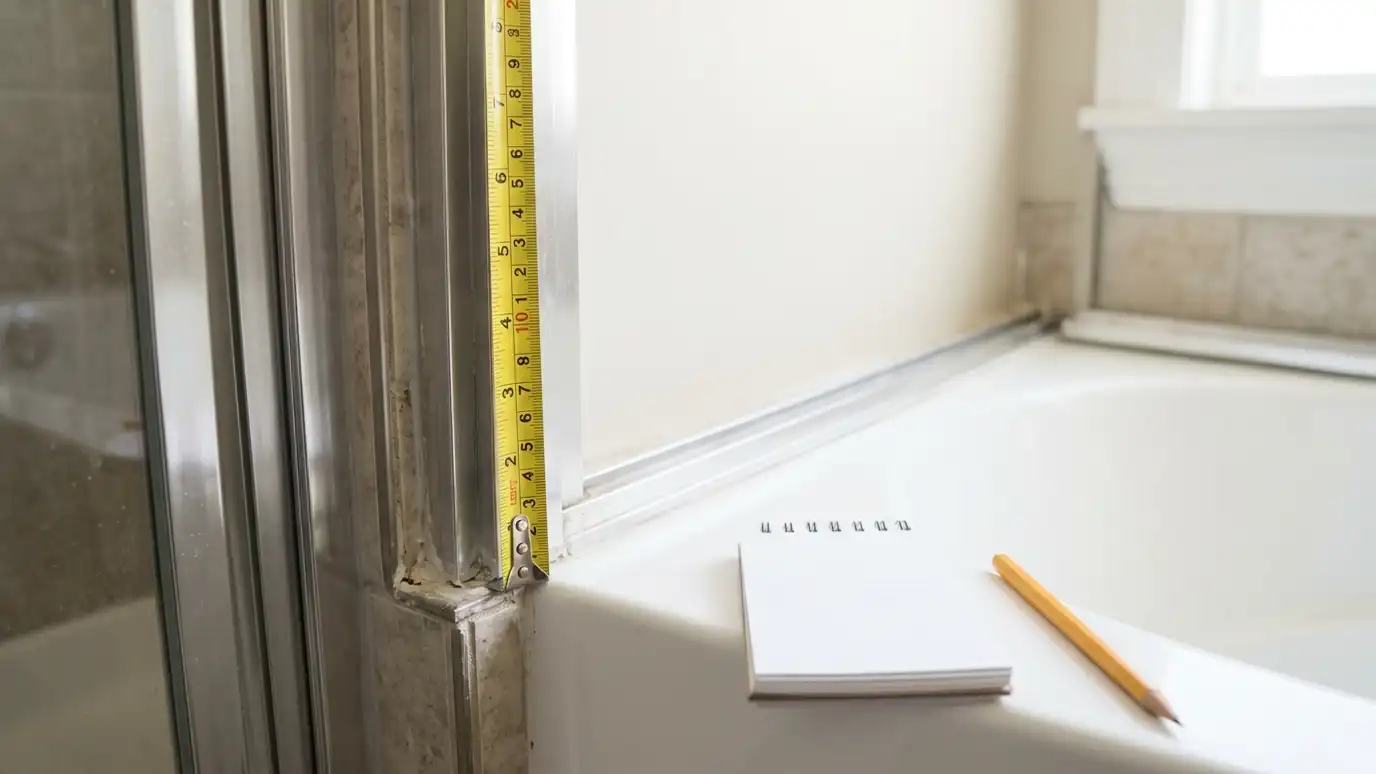
Glass often cannot be trimmed after it is made, so the measuring process tells you a lot. Ask when they measure, how many points they check and whether they measure after tile and walls are finished.
Companies that measure carefully and explain why are usually careful in other ways.
Ask what happens if the glass is made too small or too large.
Watch how a company measures at the visit. Taking time to check a level, measure in several places and look behind the tile is a strong sign of care, while a quick glance and a number is not.
Ask what is included
A good estimate lists the glass type and thickness, the hardware brand and finish, seals and sweeps, removal of the old door and installation. It also says what is not included.
Look for details that matter to you, such as protective coating, handle style or a return panel.
If a quote is vague, ask questions. If the answers are still vague, that is useful information.
When you read estimates side by side, circle the differences. If one lists a sweep, a protective coating or haul-away and another does not, ask why. Missing items are common, and they are easy to resolve before you sign.
Ask about experience and references
Ask how long the company has worked on projects like yours and whether they can show examples. Ask about the people who will be in your home.
Photos of past projects help, though remember that each project is different.
Ask any company for references you can contact yourself.
References are most useful when you can speak to them yourself. Ask what the project was, whether the company arrived when promised and how small issues were handled afterward.
Ask about licenses and rules
Requirements for contractors and for certain projects, such as railings and storefronts, vary by place. Ask what licenses, registrations or permits apply to your project and who handles them.
Do not assume that a company is covered. Ask for what you need in writing.
For larger projects, ask about how changes and delays will be handled.
For work in a building you do not own, ask the landlord or the manager what they require. Some buildings need paperwork or a particular schedule, and it is better to learn that early.
Watch for red flags
Be cautious of pressure to decide on the spot, estimates with no written scope and prices that are far lower than everyone else without an explanation.
Be cautious of any company that cannot explain what glass or hardware it will use.
A company that listens, explains and writes things down is usually a better choice than one that rushes.
Trust your sense of the conversation. A company that returns calls, explains clearly and does not rush you is likely to behave the same way during the project.
Choose the company that measures carefully, writes the scope down and explains the details in plain language.