Hinges
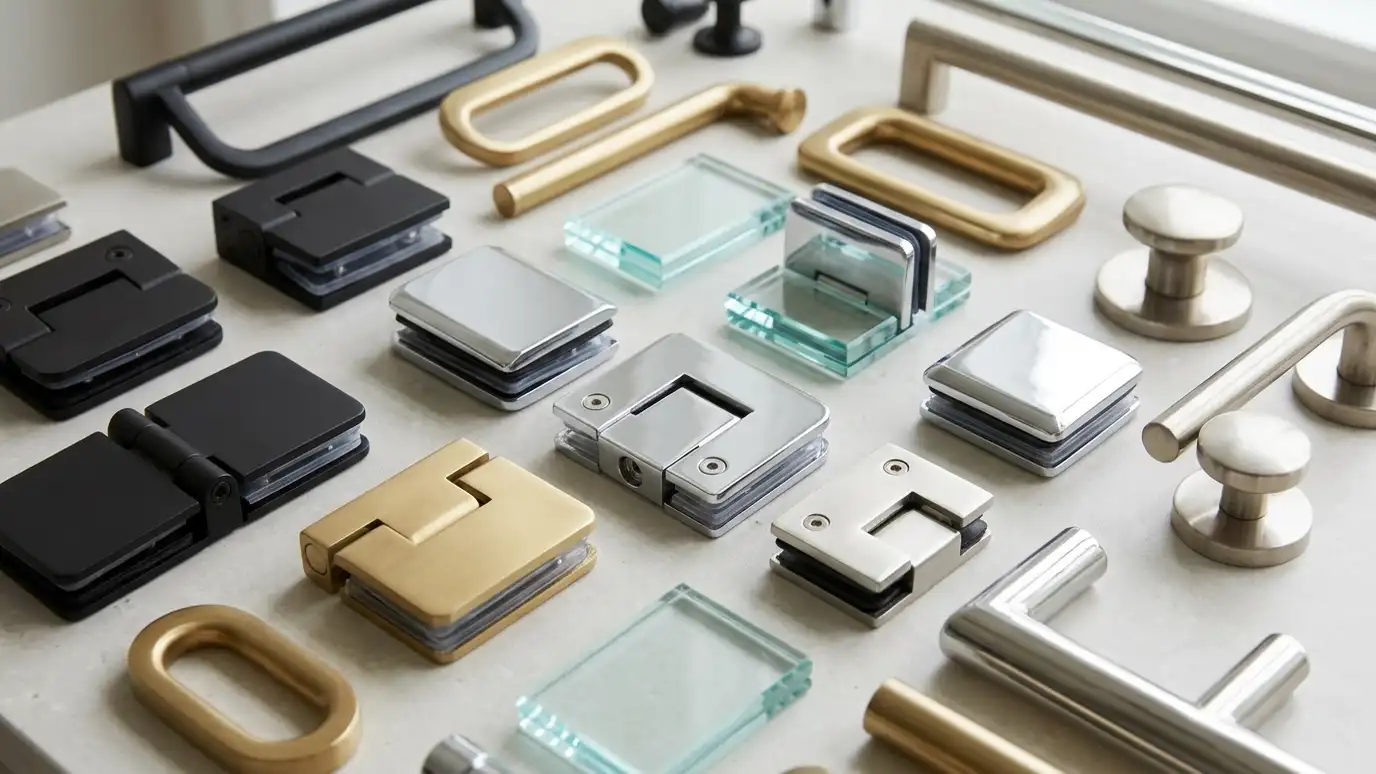
Hinges carry the weight of a frameless door. Wall-mount hinges attach the door to a wall, glass-to-glass hinges join a door to a fixed panel and pivot hinges rotate on top and bottom points. The number and rating of hinges depend on the weight of the glass.
Quality hinges are made of solid brass or stainless steel and hold up in wet rooms. Thinly plated hinges can pit and loosen.
If a door sags, the hinges are the first place to look.
Weight and size set the hardware. A tall, wide door needs more or stronger hinges than a narrow one. We choose by glass weight and tell you what the manufacturer recommends.
Clamps and brackets
Clamps hold fixed panels to walls and to each other. Brackets and support bars add stiffness to long panels and enclosures. They are usually the same finish as the hinges.
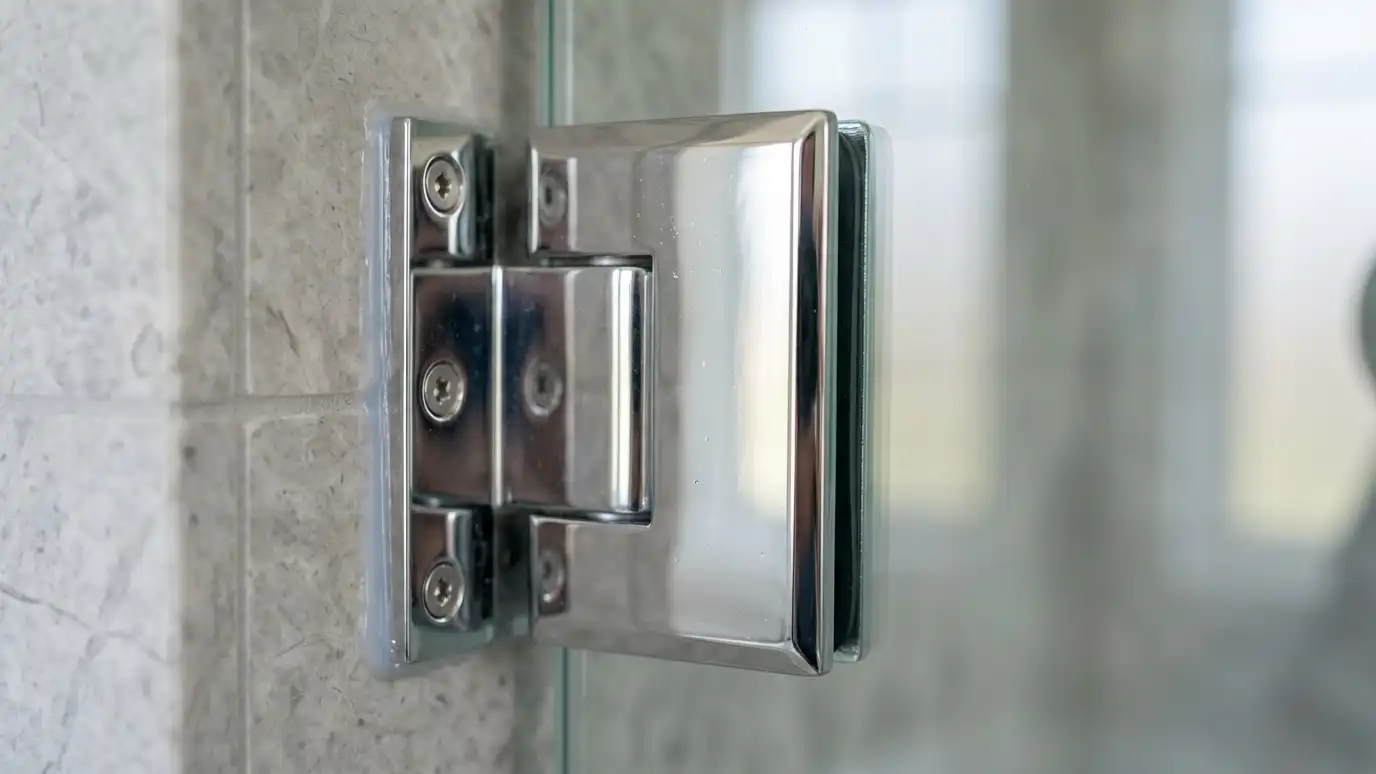
Good clamps use gaskets so metal never touches glass directly. Over-tight clamps can crack glass, so tightening matters.
Support bars can make a tall panel more stable and are sometimes optional.
Take a close look at how clamps meet glass. A clean gasket, even pressure and a square fit are signs of careful work, and they protect the glass from stress.
Handles and pulls
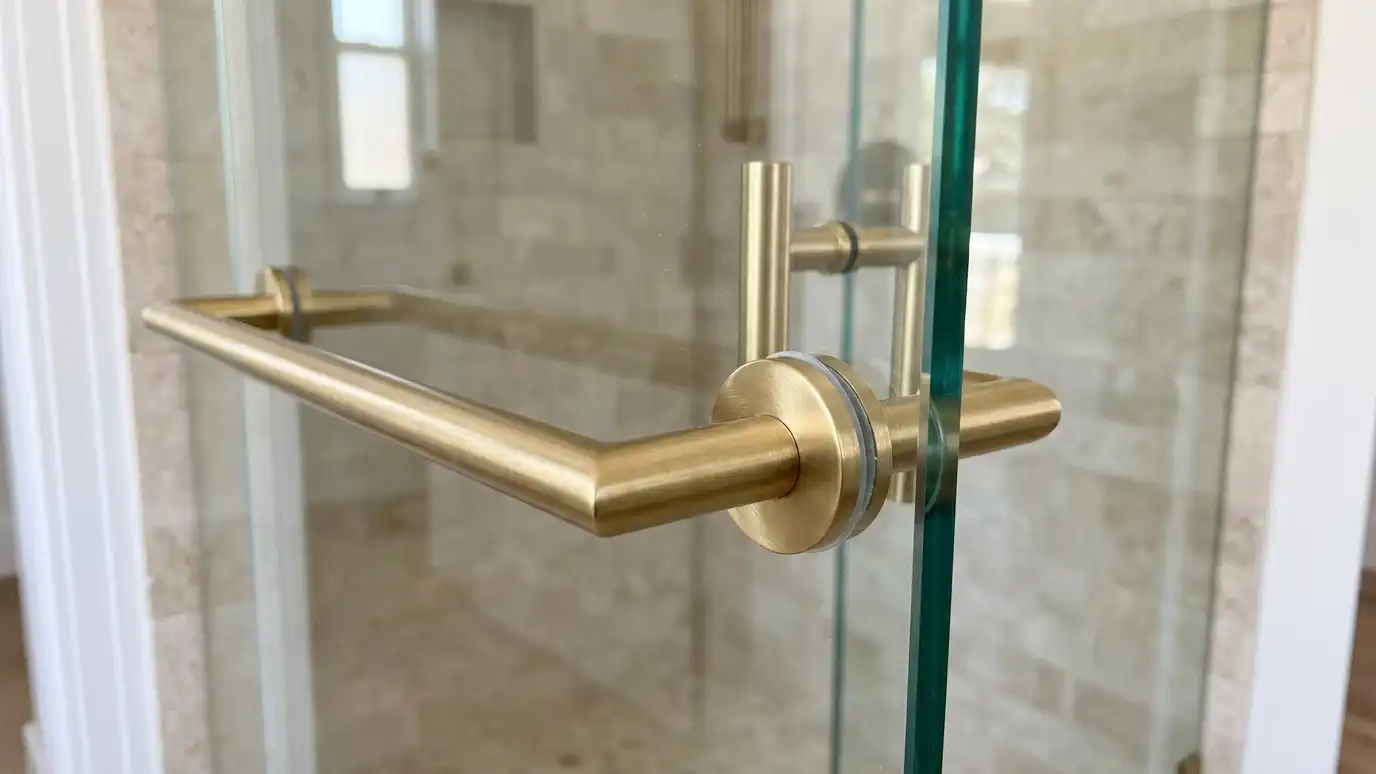
Handles range from small knobs to long bar pulls and back-to-back pulls. Some include a towel bar. The shape affects how the door feels in the hand and how it looks.
Handles must fit the holes in the glass. If you want a different style later, the spacing needs to match.
Choose a handle you can grip with wet hands.
If you are replacing a handle, bring a photo and the hole spacing. A mismatch of even a quarter inch can make a handle impossible to install without new glass.
Seals and sweeps
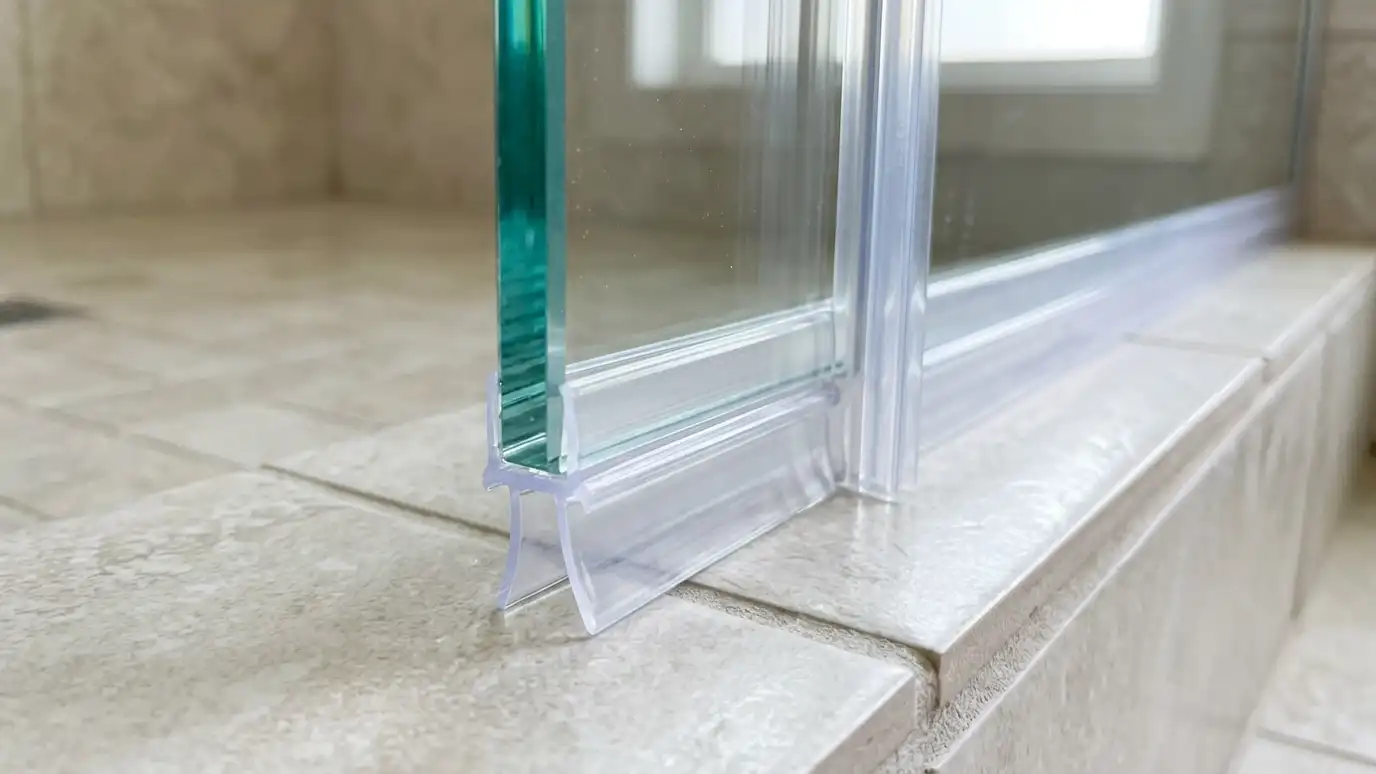
Seals and sweeps close gaps between the glass and the wall, between panels and at the bottom of the door. They are inexpensive parts that do a big job.
They wear out and should be replaced when they harden, tear or leave gaps. Using the right profile for your glass thickness matters.
Replacing seals is one of the easiest ways to stop leaks.
Check seals once or twice a year by running your finger along them. If they feel brittle, flat or torn, replace them before they start leaking.
Finishes
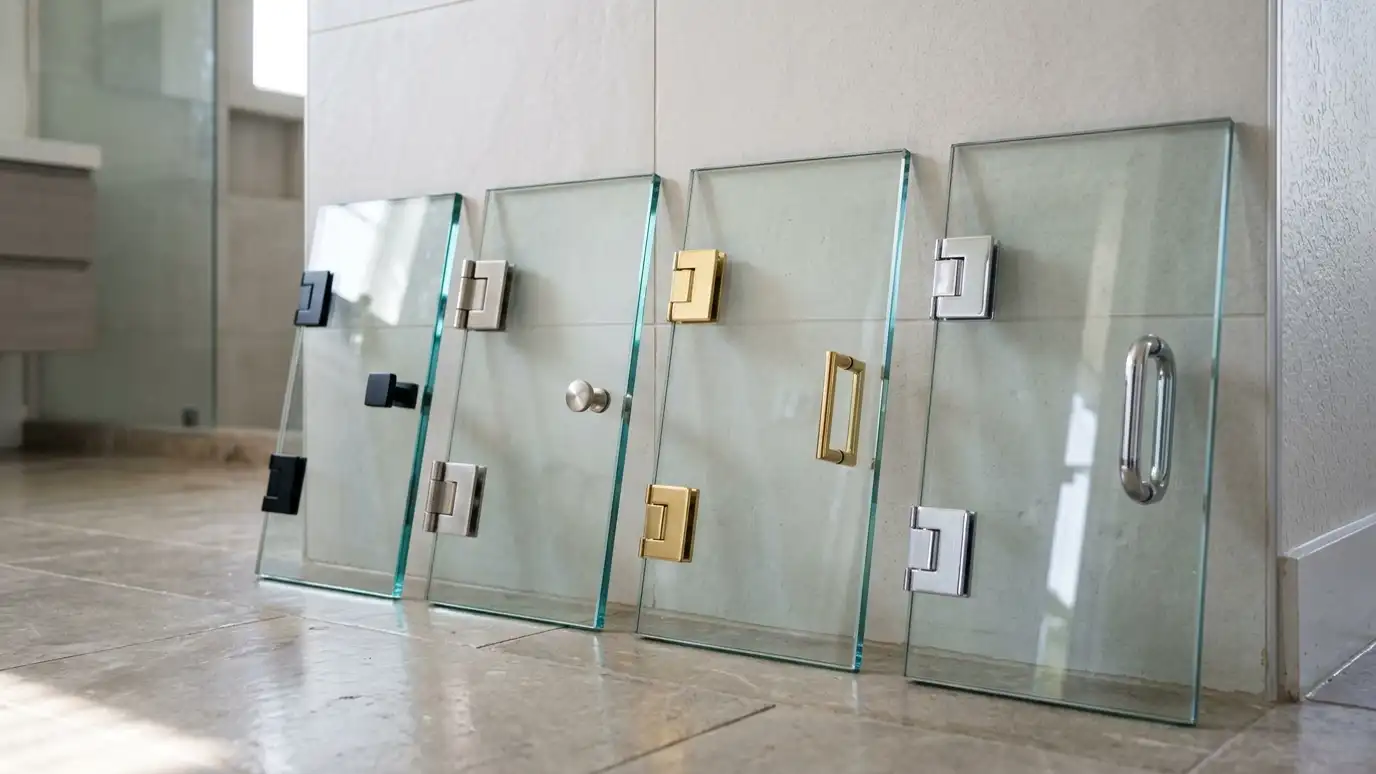
Polished chrome, brushed nickel, matte black, brass and oil-rubbed bronze are the common finishes. Each has a different look and a different tolerance for spots and scratches.
Finishes can vary between makers, so matching a faucet exactly takes care. We suggest comparing samples together.
Harsh cleaners can damage finishes, so use gentle products.
Finish names vary between makers, and a brushed finish from one company can look different from another. When matching, put the pieces side by side in the bathroom light.
Care and replacement
Wipe hardware regularly and check for loose screws every few months. Tighten gently and stop if something feels wrong.
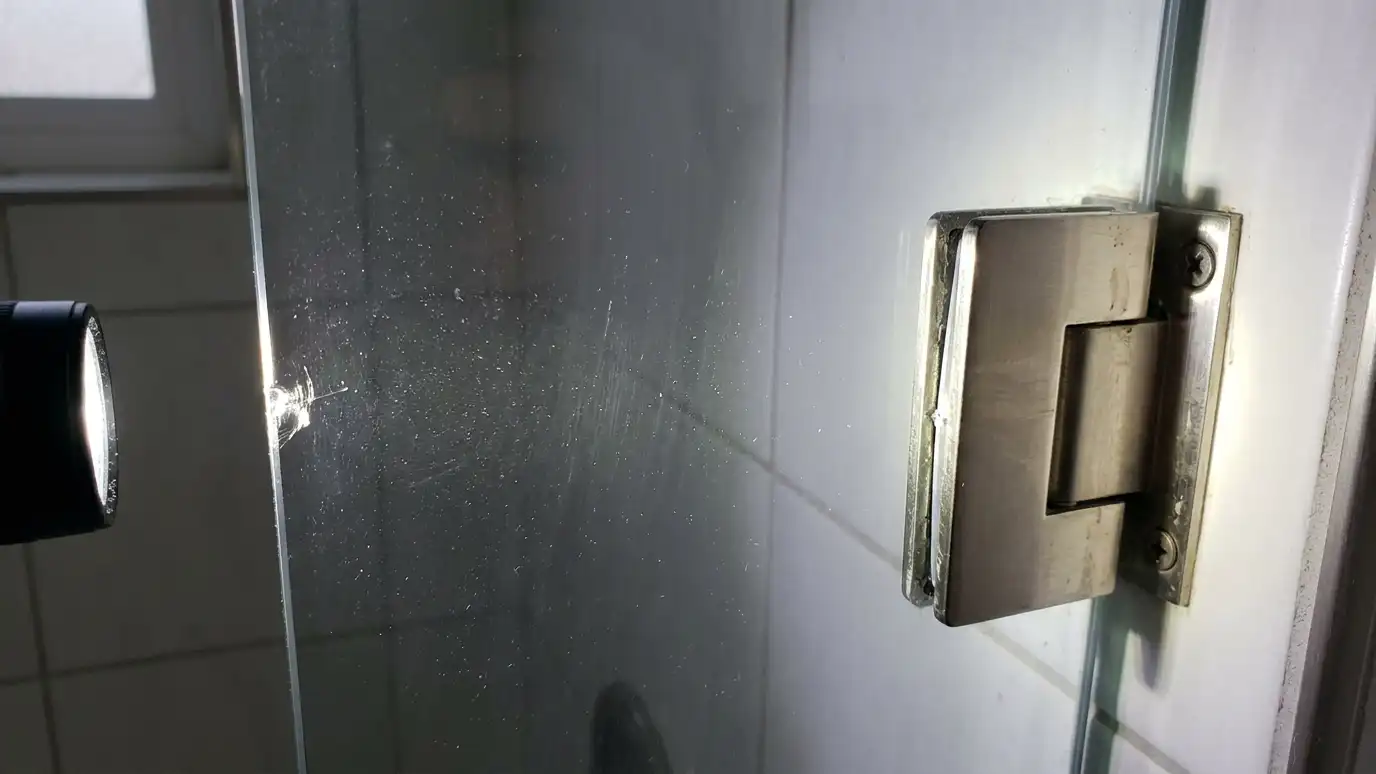
If a hinge is loose, wobbling or dropping the door, call for help soon, since failing hardware can let glass shift.
When replacing hardware, bring the old part or a photo so we can match the type.
Keep a small record of your hardware: the brand, the finish and the model if you can find it. It makes future repairs faster and less expensive.
Choose solid hardware with a finish you like, keep it clean and fix loose parts early.